How to study with ADHD comes down to two moves: use the study methods with the strongest evidence, and move the structure outside your head. Quiz yourself instead of rereading, spread those quizzes over several days, work in short timed sessions, and plan backwards from each exam so the deadline shows up today rather than the night before. Then ask your college about accommodations.
Key Takeaways
- Practice testing and spaced practice are the two methods rated “high utility” in a major 2013 review of ten learning techniques. Rereading and highlighting were rated low.
- In 3 of the 4 college studies we found, self-quizzing worked as well for students with ADHD as for their peers. The exception linked it partly to weak first attempts at recall, so small chunks are a sensible hedge.
- In a four-year study of 406 college students, those with ADHD used study strategies far less often than their peers, and the gap did not close on its own. Pick strategies deliberately.
- US college students request accommodations through disability services; students in England apply for Disabled Students’ Allowance. Neither starts automatically.
How do people with ADHD study best?
People with ADHD tend to study best with active methods in short, timed bursts: testing themselves, spreading those tests over days, and planning sessions backwards from deadlines. Self-testing and spacing top the research for every student. What ADHD changes is the delivery. Sessions get shorter, deadlines get more visible, and more of the structure comes from timers, calendars and other people.
Each row is one piece of how to study with ADHD, with its own section below.
| Study method | Why it suits ADHD | How to start |
|---|---|---|
| Self-quizzing (retrieval practice) | Active, with instant feedback; worked as well for students with ADHD in 3 of 4 college studies | Close your notes, write what you remember, then check |
| Spaced practice | Short repeated sessions replace one long cram | Quiz each topic on three separate days |
| Planning backwards | Turns a distant exam into a task for today | Count the sessions you need, then calendar each one |
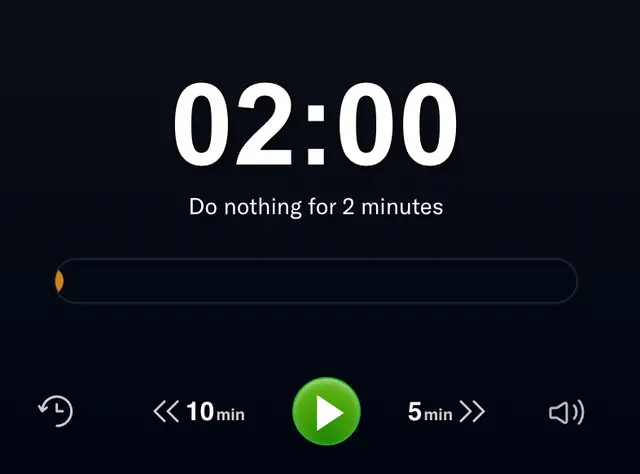
| Short timed sessions | A visible end makes starting easier | 15 to 25 minutes, countdown on screen |
| Study partner (body doubling) | Users say another person’s presence helps them start and keep going | A library table, a video call or a quiz swap |
| Movement | In a small study, boys with ADHD did better on memory tasks when they moved more | Pace while you recite answers |
| Steady background noise | Small benefit for white or pink noise in a 2024 meta-analysis | Lowest volume that covers the distraction |
| Accommodations | Changes the conditions of exams and coursework | Register with disability services before term |
Notice what is missing. Some ADHD study tips online recommend color-coded notes and highlighters. John Dunlosky and colleagues rated highlighting and rereading as low utility because neither consistently improves performance, and recommended practice testing in place of rereading. Color-code to find things later, but do not count it as studying.
Does ADHD make it hard to study?
Yes, for many students. ADHD affects attention, organization and staying on task, and studying leans on all three. In a four-year study of college students, those with ADHD earned lower grades and used study strategies far less often than classmates without ADHD, and the strategy gap did not close by itself. Good strategies have to be chosen and practiced on purpose.
The NIMH describes inattention as “difficulty paying attention, keeping on task, or staying organized” and says ADHD symptoms can “interfere with school, work, or other activities” (nimh.nih.gov, October 2026). You are far from alone: CHADD, citing UCLA survey data, reports that 6.5% of first-time, full-time students entering 184 US colleges in fall 2016 reported an ADHD diagnosis.
The four-year study, by George DuPaul and colleagues, followed 201 college students with ADHD and 205 without. The ADHD group’s grade point averages were lower throughout, a medium-sized gap, and the gap in study strategy use was large and persisted whatever services students received. Better outcomes went with better executive functioning, fewer depressive symptoms, Section 504 accommodations in high school and the use of college academic support services. Those are associations, not proof that support raised grades.
Why is self-quizzing better than rereading with ADHD?
Pulling an answer out of memory strengthens it more than reading it again, and a quiz gives you a task with an answer to check. In three of four college studies we found, practice testing worked as well for students with ADHD as for students without ADHD. The fourth found no benefit and linked it partly to weak first attempts at recall, which is why small chunks matter.
The four studies:
- Knouse and colleagues, 2016. 25 students with ADHD and 75 without learned two 48-word lists, one by restudying and one with tests. Two days later both groups showed a moderate testing effect of similar size.
- Knouse and colleagues, 2020. 58 students with ADHD and 121 without learned key-term definitions with retrieval practice, either deciding for themselves how much to practice or continuing until they recalled each one correctly three times. A week later, students with ADHD recalled and recognized the definitions as well as students without ADHD, under both conditions.
- Minear and colleagues, 2023. 36 students with ADHD and 36 without learned Swahili-English word pairs. Both groups remembered more tested pairs than restudied ones, and ADHD did not shrink the benefit, though some students with ADHD used fewer deep strategies while first learning.
- Dudukovic and colleagues, 2015. With prose passages, students with ADHD showed no advantage from testing. The authors attribute this partly to lower recall on the first test: remember little the first time, and the quiz has little to strengthen.
Dunlosky’s guide for teachers spells out the method. Write your answer before you check it, and keep testing with feedback until you recall each item correctly at least once. With flashcards, a correct card leaves the stack and a missed one goes to the back. With notes, cover the key ideas with your hand and write them out. Then return on another day and get it right again.
For ADHD, add one rule: keep each chunk small. Read one page, one lecture segment or five flashcards, then close it and recall. Short loops aim to avoid the weak first attempt that the 2015 study’s authors linked to the missing benefit. That explanation is not settled: in Minear’s 2023 study, unmedicated students with ADHD encoded less well and still gained from testing, so treat small chunks as a sensible habit rather than a proven fix.
How should you plan for an exam with ADHD?
Plan backwards from the exam date. Count the days you have, list the topics, and give each topic one session to learn it plus three short quiz sessions on separate days. Put every session in a calendar with an alarm. A deadline three weeks away often feels unreal with ADHD; this turns it into a 25-minute task you see today.
Dunlosky recommends this kind of mapping: decide how many sessions you need before an exam, when they happen, and what you practice in each. Our glossary explains backward planning as a general method. One caveat: we found no peer-reviewed study of spaced practice in students with ADHD specifically; the evidence comes from students in general.
A worked example. Your biology exam is on day 15 and covers six topics.
- Days 1 to 6: learn one topic a day in a 25-minute session that ends with a two-minute quiz.
- Quiz each topic three more times: one, three and six days after you learned it. Topic 1 gets quizzes on days 2, 4 and 7; topic 6 on days 7, 9 and 12.
- Count it: 6 learning sessions plus 18 quiz sessions makes 24 short sessions over 12 days. The busiest days hold three, about 75 minutes in total.
- Day 13 is a buffer for whatever goes wrong. Day 14 is one mixed practice test across all six topics, then a normal bedtime.
Mixing topics on day 14 is deliberate: Dunlosky’s team rated interleaved practice as moderate utility. The NHS stresses enough sleep and a regular bedtime for adults with ADHD, which rules out the all-nighter.
The plan only works if you see it. For many people with ADHD, out of sight is out of mind, a pattern we cover in object permanence and ADHD. Put sessions where you will run into them: a wall calendar or phone alarms labeled with the topic. On busy days, the 1-3-5 rule caps the list so study is not the first thing dropped, and the time blindness entry explains why estimates slip.
How long should you study at a time with ADHD?
Start with 15 to 25 minutes per session, a countdown you see, and a 5-minute break with a fixed end. No study has settled the right length for ADHD, so test it on yourself. Try a few lengths over a week and keep the one where you start fastest and actually come back after the break. Stop at a set time, before you are exhausted.
Our guide to adapting the Pomodoro technique for ADHD covers the student break studies and a one-week test for your interval. Two additions for studying. First, give each session one product, such as a cleared flashcard stack. “Study biology” has no finish line; “list the phases of mitosis from memory” does. Second, before each break, write the first action for the next session.
How do you focus when studying with ADHD?
Remove the easiest distractions before you start, then add the right kind of stimulation. Put your phone in another room, keep only this session’s materials in view, and pick a place that suits you: some students need quiet, others focus better around people. Steady background noise and small movements help some students with ADHD stay on task.
Noise. A 2024 meta-analysis by Joel Nigg and colleagues pooled 13 studies of 335 children and college-age young adults with ADHD or high ADHD symptoms. White or pink noise gave a small benefit on lab attention tasks, while people without ADHD did slightly worse with it, and it identified no brown noise studies. Our comparison of brown noise vs white noise covers that research. For the same evidence applied to work and daily tasks, see how to focus with ADHD.
Movement. In a 2015 study by Dustin Sarver and colleagues, 29 boys aged 8 to 12 with ADHD did better on working memory tasks in sessions where they moved more, though not up to typical levels. For 23 children without ADHD, more movement went with slightly lower scores. Treat one small study of children as permission to move: pace while you recite answers, or stand at a counter.
Space. The NHS lists “a personalised work space in a quiet area” among the adjustments people with ADHD may request at a place of study (nhs.uk, October 2026). At home, keep one cleared spot for studying. For focus habits that apply to any student, see our strategies to boost study focus.
Does body doubling help with studying?
Body doubling means working alongside another person, in the same room or on a video call, to start a task and stay on it. It is a community term, used mostly by neurodivergent people. The research is thin: the main peer-reviewed paper is a survey of how people use it, not a test of whether it improves grades.
That paper, by Tessa Eagle and colleagues (2024), surveyed 220 people, who described body doubling as using the presence of others to start, stay focused on, or finish a task. The other person might be present or remote, live or recorded, and the uses people listed included studying. We found no controlled trial showing that it improves exam results.
It pairs well with what does have evidence: a study group where you take turns quizzing each other is body doubling plus retrieval practice. Agree on a start time, a stop time and what each person will finish.
What accommodations can students with ADHD get?
In the US, colleges covered by Section 504 and the ADA must make academic adjustments for qualified students with disabilities, but you have to register with disability services and ask, because a high school IEP or 504 plan does not carry over. In England, Disabled Students’ Allowance pays for study support and names ADHD as an example of a qualifying condition. Common adjustments include extended exam time and reduced-distraction seating for exams.
United States. Section 504 covers programs that receive federal financial assistance, ADA Title II covers state and local government services including public education, and Title III covers private schools (ada.gov, October 2026). The Education Department’s Section 504 rule says changes may include more time to complete a degree, substitution of required courses and “adaptation of the manner in which specific courses are conducted.”
CHADD’s guide to entering college with ADHD lists accommodations commonly approved for executive functioning difficulties: extended time on assignments and exams, a note taker, lecture recordings, reduced-distraction seating, excused lateness or absences, and priority registration. You must tell the disability office you need them, and the school may ask for diagnostic reports, so CHADD advises contacting it early in the summer. NC State University’s disability office states that IEPs and 504 plans do not transfer to college.
England. Disabled Students’ Allowance covers a “specific learning difficulty, for example dyslexia or ADHD.” Students can get up to £27,783 a year, based on need rather than household income, and do not pay it back (gov.uk, October 2026). After a needs assessment it pays for things like specialist equipment and a specialist note taker. You hear within 4 weeks whether you qualify, but support takes up to 14 weeks to arrive, so apply well before term. Courses starting from 1 January 2027 use the new Lifelong Learning Entitlement route. Outside England, ask your own student finance body.
How FocusBox can help you study
FocusBox is a productivity app built with ADHD and timeboxing in mind. It is not a treatment, but it fits the backward plan above: each of the 24 sessions becomes a task with a duration, such as “Topic 3: recall from memory, 25 min.”
When a task’s time is up, FocusBox alarms fire as a flashing color in the box or as a sound plus the color, and you choose how often the sound repeats until you dismiss it. Ambient sounds such as “Running Water”, “Waves”, “Forest Sounds” and “Coffee Shop” play in the background, and full screen mode shows your current task, timer and progress while hiding browser tabs and bookmarks. Alarms are on the free plan. The free plan lists “1 Task” and “1 Project” (focusbox.io/pricing, October 2026), so a 24-session plan and a Box per subject need a paid plan.
The FocusBox for students page suggests a separate Box for each subject or course, and says FocusBox tracks time spent on each task with daily and weekly stats. The online study timer template is a series of tasks with their own focus and duration, which you adjust.
When should you get professional help?
Get help if studying stays hard despite good methods, if grades keep slipping, or if stress, low mood or poor sleep build up around exams. The NHS advises seeing a GP if ADHD symptoms are “affecting your studies, work or relationships.” Students who suspect undiagnosed ADHD should start with a GP, a primary care doctor or campus health services.
The NIMH lists medication and psychosocial treatments such as cognitive behavioral therapy among standard ADHD treatments. ACCESS, a program built for college students, combines group CBT with individual mentoring over two semesters; in a randomized trial with 250 students, it improved ADHD symptoms, executive functioning and the use of disability accommodations compared with a delayed-treatment group. Ask your counseling center what it offers; medication questions belong with your prescriber.
Our ADHD test is a screening tool, not a diagnosis (the full profile needs a FocusBox subscription), but it gives you something concrete to bring to an appointment. If exam stress ever turns into thoughts of harming yourself, call or text 988 in the US, or contact your local emergency services.
Frequently Asked Questions
What is the 1-3-5 rule for ADHD?
The 1-3-5 rule is a general daily planning rule: one big task, three medium tasks and five small ones, nine in total. There is no separate ADHD version, and no study has tested it for ADHD. Students can use it to cap a day, with a learning session as the big task and quiz sessions as the medium ones.
Can you get extra time on exams for ADHD?
Often, but you have to ask. In the US, CHADD lists extended exam time among commonly approved accommodations, requested through your college’s disability office with documentation. In the UK, the NHS says you may request reasonable adjustments at your place of study, so ask your university’s disability service.
Do highlighters and rereading help students with ADHD?
Not much on their own. Dunlosky and colleagues rated both as low utility for students in general, and we found no evidence that they work better with ADHD. Highlight what you will quiz yourself on, then close the book.
Sources
- Dunlosky et al. Improving Students’ Learning With Effective Learning Techniques (Psychological Science in the Public Interest, 2013; PubMed, accessed October 2026)
- Dunlosky. Strengthening the Student Toolbox: Study Strategies to Boost Learning (American Educator, AFT, 2013; accessed October 2026)
- Knouse, Rawson, Vaughn and Dunlosky. Does Testing Improve Learning for College Students With ADHD? (Clinical Psychological Science, 2016; APS, accessed October 2026)
- Knouse, Rawson and Dunlosky. How much do college students with ADHD benefit from retrieval practice when learning key-term definitions? (Learning and Instruction, 2020; accessed October 2026)
- Minear et al. Is practice good enough? Retrieval benefits students with ADHD but does not compensate for poor encoding in unmedicated students (Frontiers in Psychology, 2023; PMC, accessed October 2026)
- Dudukovic et al. Diminished testing benefits in young adults with ADHD (Memory, 2015; PubMed, accessed October 2026)
- DuPaul et al. Academic Trajectories of College Students with and without ADHD: Predictors of Four-Year Outcomes (J Clin Child Adolesc Psychol, 2021; PMC, accessed October 2026)
- Nigg et al. Do White Noise or Pink Noise Help With Task Performance in Youth With ADHD or With Elevated Attention Problems? (J Am Acad Child Adolesc Psychiatry, 2024; PMC, accessed October 2026)
- Sarver et al. Hyperactivity in ADHD: Impairing Deficit or Compensatory Behavior? (J Abnorm Child Psychol, 2015; PubMed, accessed October 2026)
- Eagle, Baltaxe-Admony and Ringland. An Investigation of Body Doubling with Neurodivergent Participants (ACM Transactions on Accessible Computing, 2024; accessed October 2026)
- Anastopoulos et al. A randomized controlled trial examining CBT for college students with ADHD (J Consult Clin Psychol, 2021; PubMed, accessed October 2026)
- Attention-Deficit/Hyperactivity Disorder (NIMH, accessed October 2026)
- ADHD in adults (NHS, accessed October 2026)
- Gerton. Entering College with ADHD (CHADD, Attention magazine, August 2018; accessed October 2026)
- Misunderstandings About IEPs, 504s, and College Accommodations for LD and ADHD (NC State Disability Resource Office, accessed October 2026)
- Guide to Disability Rights Laws (US Department of Justice, accessed October 2026)
- 34 CFR 104.44 Academic adjustments (eCFR, accessed October 2026)
- Disabled Students’ Allowance: eligibility (GOV.UK, accessed October 2026)
- Disabled Students’ Allowance (GOV.UK, accessed October 2026)
- Disabled Students’ Allowance: how to apply (GOV.UK, accessed October 2026)
- 988 Suicide and Crisis Lifeline