
2-minute “Do Nothing Timer”
A 2-minute do nothing timer turns deliberate rest into a habit. Why two minutes is too short to argue with, and why you need a real timer to do it.
Newest first. 161 guides on timeboxing, ADHD and focus, AI to-do lists and productivity apps. Browse by topic from the blog home.
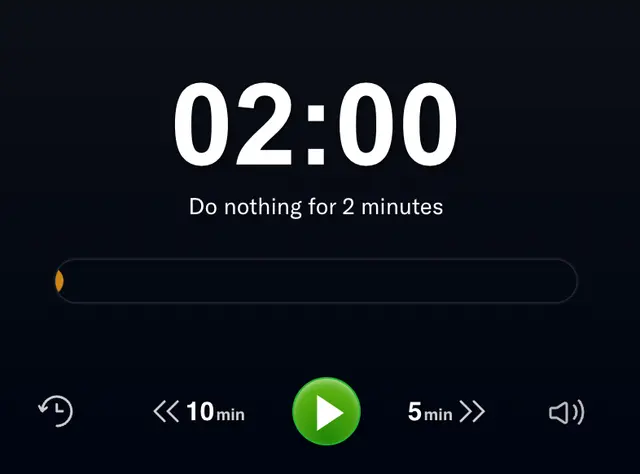
A 2-minute do nothing timer turns deliberate rest into a habit. Why two minutes is too short to argue with, and why you need a real timer to do it.

What research says about background noise and focus: why steady ambient sound masks distracting noise, which sounds to try, and how to test them.

The 20-20-20 rule for eye fatigue: every 20 minutes, look at something 20 feet away for 20 seconds. Why it relaxes your eyes and doubles as a break point.

Eat the Frog means doing your hardest task first thing. Learn why it works, the steps to follow, its pros and cons, and when the technique fits badly.
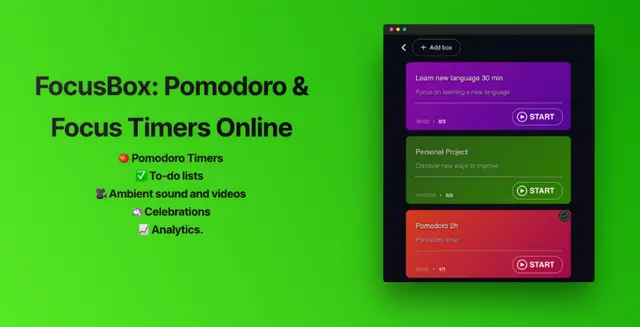
Boost productivity and achieve your goals with FocusBox: Pomodoro & Focus Timers Online Chrome extension. Detailed time stats and task completion tracking.

What self-sabotage is, why people undermine their own goals, how it links to cognitive dissonance, and practical steps to stop sabotaging yourself.
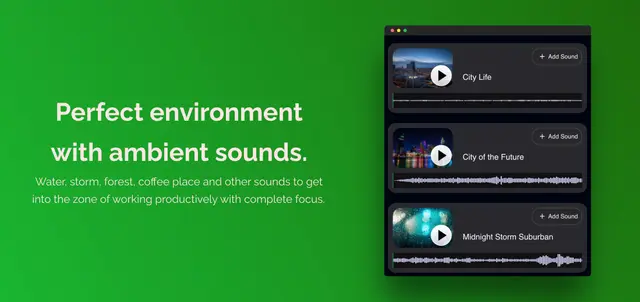
Transform your home office into a healthy, productive space with these tips. Learn how FocusBox can help you avoid distractions and take necessary breaks.

The power of distraction-free work: why uninterrupted blocks produce more than the same hours broken up, and why distraction-free is a setup decision.

Learn how ego can be the cause of procrastination and how to overcome it with FocusBox. Ego and Procrastination: Understanding the Link between Them.
Strategies to boost your study focus: cut notifications first, use active recall instead of rereading, and treat sleep, food and breaks as study technique.

The 52-17 rule means 52 minutes of focused work, then a 17-minute break. How to use it, why the odd numbers, and how it compares to the Pomodoro Technique.

Why freelancers procrastinate without a boss, and what helps: clear goals with deadlines, smaller tasks, fewer distractions and timeboxed work blocks.

FocusBox combines timeboxing, task management and focus sounds in one place, so you stop switching tools. Judge it on an ordinary week, not the first day.

Timeboxing vs to-do lists: how each method works, their pros and cons, and why the best setup uses a list for inventory and timeboxes for commitment.

The Pomodoro Technique explained: 25 minutes of work, a short break, repeat. Why a short interval makes starting easy, and when to change the default length.
Timeboxing gives every task a fixed slot and a hard stop. Learn why it works, how to plan a timeboxed day, how long boxes should be, and what to do on overruns.
Designed for ADHD and Timeboxing: AI To-Do Lists, Timers, and More.