Key takeaways
- ADHD focus is tied to dopamine pathways, so a bit of extra input can help rather than distract.
- White noise has the strongest evidence, but the effect varies enough that personal testing beats any ranking.
- What works for reading may not work for writing. Expect to change the sound with the task.
Filter Your Focus: How to Pick the Right Ambient Sound for ADHD
Finding the right ambient sounds for ADHD isn’t about chasing the latest playlist trend. It’s about understanding the specific properties of sound that help your brain settle into a productive state. If certain sounds help you concentrate while others irritate you, that’s not random – ADHD brains process sensory input differently, and these preferences matter.
Why Ambient Sound Matters for ADHD
ADHD is linked to differences in dopamine pathways, which means many people with ADHD need more external input to reach an optimal level of alertness for focus. Ambient sound can provide this input, helping the brain find a balance – alert enough to concentrate, but not so stimulated that restlessness takes over.
Key Insight: There is no universal “best” sound for ADHD focus; the most effective ambient sound is the one that matches your individual brain and task needs.
Personalization Over Popularity
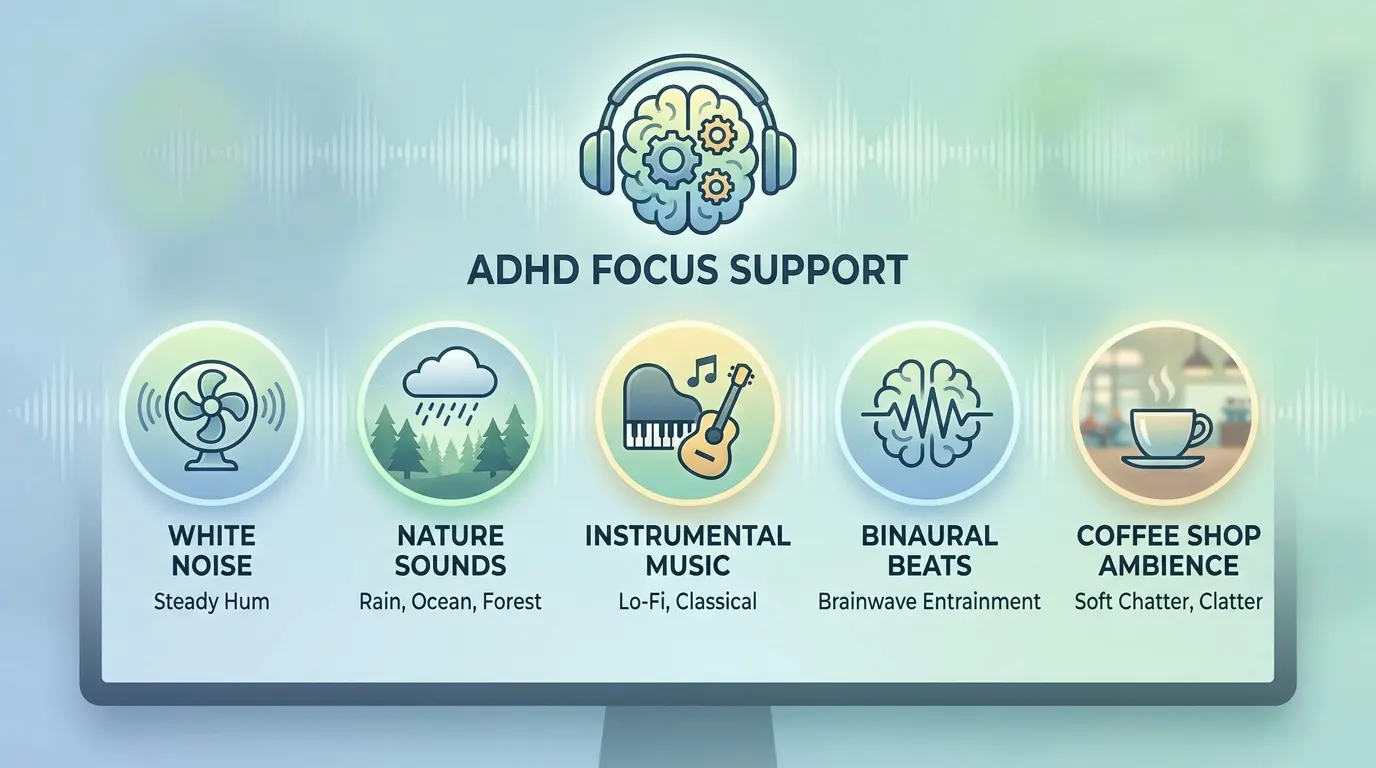
White noise is the most researched option – Söderlund et al. (2007) found that moderate white noise can improve cognitive performance in children with ADHD. Still, preferences vary widely. Some find white noise too harsh, while others prefer the deeper tones of brown noise or the steady rhythm of ocean waves. Nature sounds, instrumental music, and lo-fi hip-hop are also popular choices. Binaural beats are gaining attention, but research on their effectiveness remains limited, so careful experimentation is advised.
Experimentation Is Essential
What helps you focus during one task – like steady rainfall for reading – might distract you during another. Volume, sound complexity, and your own associations with certain sounds all play a role. Start with short sessions, adjust volume to avoid fatigue, and be ready to try different options as your needs shift throughout the day.
Think of this as building a personalized audio toolkit. By exploring various ambient sound profiles and tracking how they affect your focus, you’ll develop an approach that fits your ADHD, not someone else’s idea of productivity.
Ambient Sounds for ADHD: Quick Comparison Table
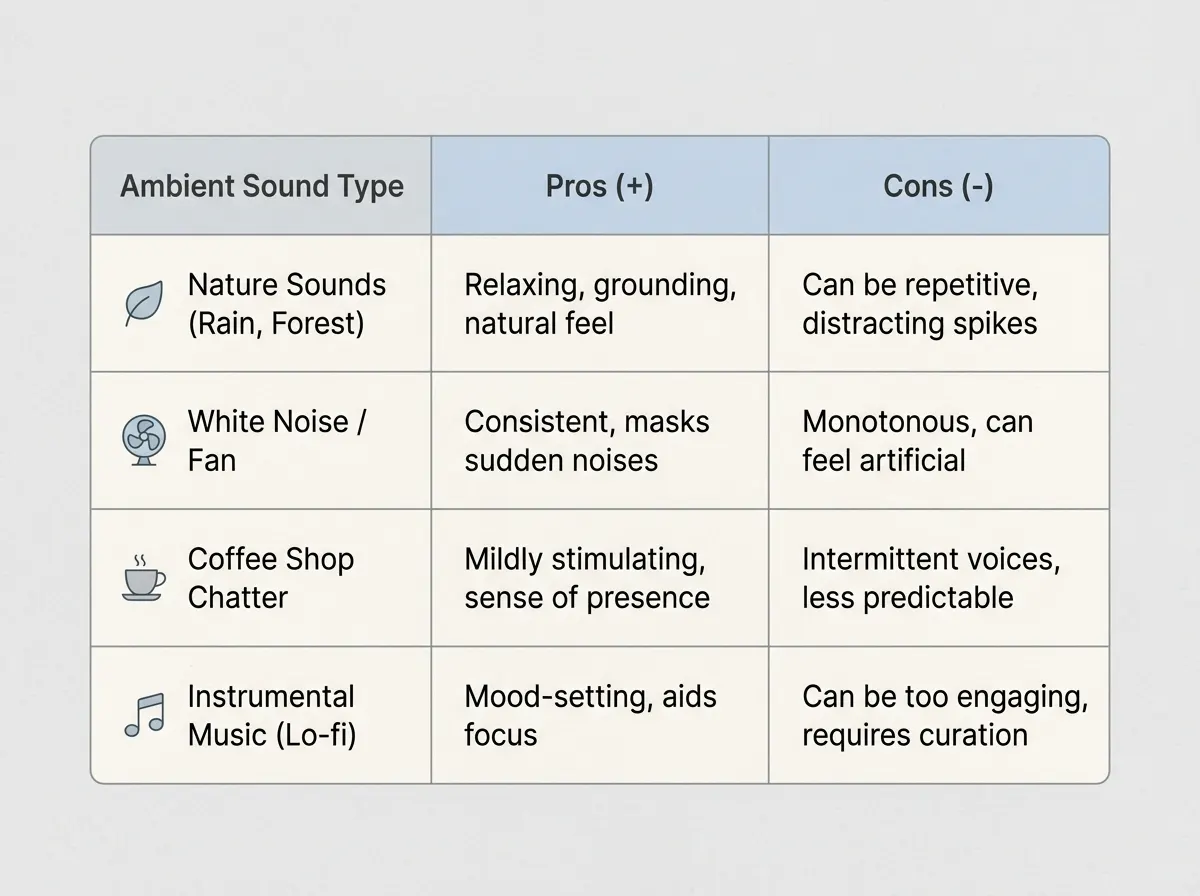
Choosing the right ambient sounds for ADHD can feel overwhelming, given the range of options and the unique way each soundscape interacts with individual brain chemistry. Below is a comparison table to help you scan the main types covered in this post. Each row highlights a sound’s core strength, a key limitation, typical use case, and price or availability if a premium option is involved. Use this as a starting point for your own experimentation.
| Name | Key Strength | Key Limitation | Best For | Price |
|---|---|---|---|---|
| White Noise | Scientifically backed for boosting attention in ADHD (Söderlund et al., 2007) | Can feel harsh or fatiguing over long sessions | Blocking distraction, repetitive tasks | Free & paid apps |
| Brown Noise | Deeper, less sharp than white noise; calming for many | Too low-frequency for some, may mask speech poorly | Deep focus, anxiety reduction | Free & paid apps |
| Nature Sounds (Rain, Ocean, Forest) | Gentle, familiar patterns reduce stress and support focus | Can distract if too dynamic or if animal sounds are included | Reading, writing, relaxation | Free, premium for high-quality |
| Instrumental & Lo-Fi Music | Steady rhythm, no lyrics to distract | May hinder performance on demanding cognitive tasks | Creative work, admin tasks | Mostly free, some paid playlists |
| Binaural Beats | Potential for focus enhancement, unique brainwave effects | Limited research, requires headphones, results can vary | Meditation, experimental focus | Free & premium tracks |
| Pink Noise | Softer than white noise, balanced frequency profile | Less studied than white/brown noise, may sound dull to some | Long work sessions, sleep | Free & paid apps |
| Café/Urban Ambience | Simulates busy environments, helps some ADHD minds “tune in” | Can feel overwhelming for the noise-sensitive | Brainstorming, solo work in public | Free & premium |
| Custom Sound Mixes (layering two sources) | Personalized blends tailored to user preferences | May require setup and experimentation | All-day productivity, unique sensory needs | Depends on the apps you combine |
Remember, individual preferences and task demands play a major role in how effective each sound type will be. Use this table as a springboard for your own experimentation as you search for the most useful ambient sounds for ADHD.
White Noise: The Classic ADHD Focus Booster
Of all the ambient sounds for ADHD, white noise is the most researched and widely used. Its “static” quality – like a softly detuned radio or a humming air purifier – makes it accessible and straightforward. Unlike complex soundscapes, white noise delivers a steady blanket of sound that masks distractions and provides external stimulation. For people with ADHD, this can be the difference between scattered thoughts and sustained concentration.
Key Insight: Moderate white noise offers a proven, accessible way to boost focus for many with ADHD, but it isn’t universally comfortable – personal experimentation is essential.
Söderlund et al. (2007) found that children with ADHD performed better on memory and attention tasks when exposed to moderate white noise. White noise introduces neural stochastic resonance: it adds just enough external input to amplify weak neural signals, helping the ADHD brain process information more effectively. For those whose attention drifts in silence, white noise can provide the missing stimulation their brains crave.
However, listener fatigue and harshness are real concerns, especially during long work sessions. Some people describe it as “sharp” or “grating” after a while, rather than soothing. This means white noise is useful, but not always sustainable for every task or every listener.
When White Noise Works Best
White noise excels when consistent, repetitive focus is needed and unpredictable distractions are a problem. For example, if you’re sorting emails, entering data, or cleaning up your workspace, steady background input can help keep your mind anchored. Many users find it especially effective for masking sudden noises in open-plan offices, shared apartments, or busy environments.
- Optimal for repetitive or routine tasks where you need to block out background chatter or unpredictable interruptions
- Helpful during work-from-home calls, study sessions, or sleep routines – any context where sensory input needs to be managed
- Less likely to interfere with reading or problem-solving compared to music or nature sounds
But white noise isn’t a cure-all. For cognitively demanding tasks or creative brainstorming, some people find it mentally fatiguing or distracting. Individualized use – and knowing when to switch to another sound type – is crucial.
Honest Drawbacks: Why Some Users Opt Out
Despite its popularity, white noise is not universally loved. The same qualities that help block distractions can make it feel relentless over time. Sensory-sensitive individuals often describe the noise as “too harsh,” or report headaches after extended use. For others, the monotony can become mentally exhausting, creating restlessness instead of calm.
If you notice irritation, fatigue, or a drop in focus after a session, consider switching to a gentler sound like brown noise, nature ambience, or instrumental music. This trial and error is not only normal but encouraged – a customized approach is what makes ambient sounds for ADHD truly effective.
Brown Noise: Deep, Soothing Frequencies for ADHD Minds
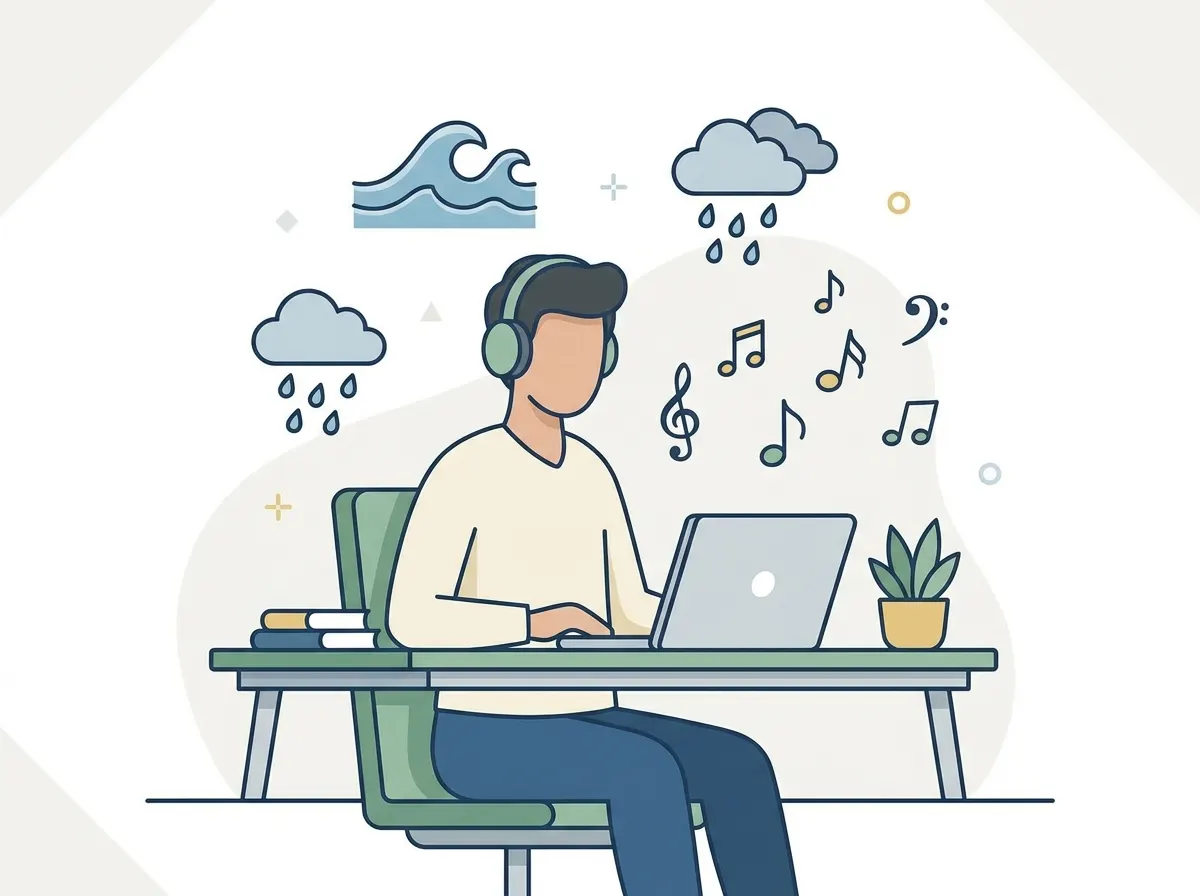
If you’ve tried background audio during work sessions, you’ve probably heard about brown noise. Unlike the sharper hiss of white noise, brown noise emphasizes deeper, lower frequencies – think of the rumble of distant thunder or the steady crash of ocean surf. For many people with ADHD, these deep sound frequencies aren’t just pleasant; they can be especially helpful for focus and emotional regulation.
Brown noise differs from white noise in how it distributes energy across frequencies. While white noise contains all frequencies at equal intensity, brown noise’s power increases as the frequency decreases, resulting in a richer, more muffled sound. This is especially important for individuals who find the high-pitched static of white noise distracting or fatiguing over long periods.
Why Brown Noise Stands Out for ADHD Brains
People with ADHD often have a heightened sensitivity to certain types of sensory input. Ambient sounds can help by boosting the brain’s arousal level to a point where focus comes more naturally. While white noise can enhance cognitive performance by stimulating neural pathways, its broad frequency range sometimes creates an edge that becomes tiring, especially during long or repetitive tasks.
This is where brown noise comes in. Its lower frequencies are less likely to trigger sensory irritation or “audio fatigue.” Many users report that brown noise feels like a soft, protective blanket for the mind, blocking out unpredictable office sounds or household distractions. It’s particularly useful when you need sustained, deep work without the mental clutter that sharper sounds can provoke.
- Less harshness: The absence of high-pitched static makes brown noise more tolerable for longer sessions.
- Consistent masking: The deep rumble can cover up distracting environmental noises without drawing attention to itself.
- Mood regulation: For some, the immersive quality of brown noise dampens anxiety and helps manage sensory overload.
Before/After: Brown Noise in Real-World Use
| Before (Weak Example) | After (Strong Example) |
|---|---|
| You sit down to tackle a report in silence. After ten minutes, your mind starts wandering. Every background noise – a neighbor’s dog, a clinking mug – pulls you out of focus. Frustration builds, and you give up before the hour is up. | You start the same task, this time with brown noise playing through headphones. The constant, low-frequency sound absorbs the sporadic noises that usually distract you. After 45 minutes, you realize you haven’t checked your phone once. You feel calm, slightly tired in a good way, and the report is nearly finished. When the session ends, you’re less irritable and more satisfied with your progress. |
Brown noise doesn’t just mask distractions – it sets a mental tone that’s steady and supportive. The focus lasts longer, and the post-work “crash” often reported by ADHD users is less severe. The key is that the sound doesn’t demand attention; it simply fills the gaps where distraction would otherwise slip in.
Why Brown Noise Isn’t for Everyone
No single audio profile fits all. Some people find brown noise too monotonous, or notice it induces drowsiness during tasks requiring high alertness. For cognitively intense work, you might prefer brown noise’s gentle rumble. For lighter creative tasks, you may want the variation of nature sounds or instrumental music instead.
Ultimately, brown noise is a valuable option in the toolkit for anyone seeking practical ambient sounds for ADHD. Its deep frequencies offer a unique blend of sensory comfort and reliable masking, helping many achieve the kind of calm, consistent focus that’s often elusive in a noisy world.
Nature Sounds: Ocean Waves, Rainfall, and Forest Ambience
Many people exploring ambient sounds for ADHD quickly gravitate toward nature soundscapes. The rhythm of ocean waves, the steady patter of rainfall, and the gentle rustle of forest leaves offer a type of sensory input that feels both calming and immersive. But why do these natural sounds, in particular, work so well for some ADHD brains?
Sensory Benefits of Nature Soundscapes
For individuals with ADHD, external stimulation isn’t a luxury – it’s a requirement. ADHD brains often need gentle, predictable input to reach the “sweet spot” for focus. Nature sounds excel here. The steady crash of waves, the consistent drip of rain, or the subtle ambient hum of a forest can all act as a soft buffer against distractions. Unlike busy office noise or unpredictable music, these sounds are typically non-intrusive and rhythmic, which can help anchor attention without overwhelming the listener.
Some users prefer natural soundscapes because they feel less artificial. For example, a continuous rain audio track can provide enough background presence to stimulate the brain without pulling focus away from reading or task work. This is especially useful during activities that require long, undisturbed stretches of concentration.
How to Choose the Right Nature Sound
Not all nature tracks are created equal. Some recordings layer in birdsong, distant thunder, or shifting wind, which might seem relaxing but can become distracting – especially for those with sensitive sensory processing or heightened distractibility. When selecting ambient sounds for ADHD, consistency is crucial. Look for tracks where the main element – like rain or waves – remains steady in volume and pattern throughout.
- Ocean Waves: Best when the rhythm is slow and repetitive, not punctuated by loud crashes or sudden silence.
- Rainfall: Continuous rain with minimal thunder or bird sounds works well for most. “Brown rain” tracks, which emphasize deeper frequencies, can be especially soothing.
- Forest Ambience: Choose versions that focus on wind through trees or distant stream sounds, rather than unpredictable wildlife noises.
- Wind: Gentle, sustained wind audio can create a cocooning effect, but avoid those with sudden gusts.
Test different lengths and layers. Some people benefit from looping a short, even soundscape, while others need longer, less repetitive tracks. If a soundscape ever draws your attention away from your work, that’s a clear sign it’s too dynamic. There’s no universal “perfect” track – personal experimentation is the only way to know what fits your brain’s needs.
Limitation: Even the best nature tracks can backfire if they include abrupt animal calls, shifting weather, or volume spikes. These dynamic elements may be relaxing for some, but for others, they break concentration and become a new source of distraction. If that’s the case, try a simpler sound or explore white or brown noise alternatives.
Nature soundscapes offer a familiar starting point for building your own focus toolkit, but their value comes from careful selection and ongoing adjustment. The right ambient sound can make ADHD work sessions both more productive and more peaceful.
Instrumental and Lo-Fi Music: Rhythm Without Distraction
For many adults with ADHD, ambient sounds do more than just fill silence – they can nudge the brain into a productive groove. Among the choices, instrumental music and lo-fi hip-hop have earned a loyal following. With no lyrics to snag your attention, these tracks offer a steady pulse that helps drown out distractions without becoming the distraction themselves. It’s a delicate balance: enough stimulation to keep your mind engaged, but not so much that it steals the spotlight from your work.
Söderlund et al. (2007) found that moderate white noise improved cognitive performance in children with ADHD by raising neural stimulation to a more optimal level. While the research focus was on white noise, the underlying principle applies to many non-lyrical soundscapes, including lo-fi and instrumental genres. These sounds help bridge the gap in dopamine regulation, supporting the brain’s need for external input to hit its focus “sweet spot.”
Why Lyrics Get in the Way
Traditional music, especially with vocals, tends to hijack the brain’s language centers. For ADHD brains juggling multiple distractions, lyrics can add a layer of cognitive load that makes focusing on written or complex work much harder. Instrumental tracks sidestep this problem. By eliminating lyrics, they create a background that’s rhythmically engaging but emotionally neutral. This is especially true for unfamiliar or low-key pieces, which keep the auditory environment predictable and non-intrusive.
Lo-Fi Beats vs. Classical Instrumentals: Which Works Best?
Not all instrumental music is created equal. Lo-fi hip-hop and classical instrumentals offer distinct flavors of auditory support. Lo-fi beats are built around repetitive rhythms and mellow melodies, often layered with soft vinyl crackle or atmospheric samples. This genre’s predictable structure appeals to those who want a modern, calming vibe that fades into the background. On the other hand, classical instrumentals – think Debussy’s “Clair de Lune” or Satie’s “Gymnopédies” – deliver a more dynamic range of tempo and emotion, which can be energizing or grounding depending on the piece.
- Lo-fi beats: Steady, loop-based, emotionally flat. Great for sustained work sessions and creative flow.
- Classical instrumentals: Richer dynamics, sometimes more emotionally complex. Works well for tasks that benefit from variation and subtle stimulation.
Both genres are easy to access through streaming platforms or ambient sound features in productivity apps. The best choice comes down to personal taste and the type of task you’re tackling.
Instrumental vs. Nature Sounds: Cognitive Load Matters
Instrumental music and nature sounds play different roles when it comes to ambient sounds for ADHD. Instrumental tracks offer structure and rhythm, which can help drive repetitive tasks. Nature sounds – like rainfall or forest ambience – are more neutral and less likely to trigger emotional or semantic associations. For work that requires heavy reading or language processing, even lyric-free music can pull focus away from the words on the screen. In these cases, many users find that nature sounds or gentle brown noise are the safer bet.
This is not a hard rule. Some people thrive with a rhythmic background, even during complex tasks. But if you notice music disrupting your comprehension or problem-solving, try switching to a less structured, more organic soundscape. Experimentation is the only way to find what supports your focus best.
Instrumental and lo-fi music remain popular because they walk the line between stimulation and distraction. By tuning your auditory environment, you give your ADHD brain a better shot at sustained attention – especially when you match the sound profile to the cognitive demands of your task.
Binaural Beats: Exploring Science and Skepticism
Binaural beats have become a buzzword in the world of ambient sounds for ADHD, but do they actually make a difference? The theory is straightforward: when you listen to two tones that differ slightly in frequency – one in each ear – your brain perceives a third, “binaural” beat. This auditory illusion is said to influence brainwave activity, nudging you toward a desired mental state. For ADHD, the hope is that these beats can help dial up focus and calm distractibility by gently synchronizing neural rhythms.
Clinical research on binaural beats for ADHD is still in its early days. Unlike white noise or nature sounds, which have been studied more extensively, only a handful of small studies have explored binaural beats in ADHD settings. Some report improvements in attention or working memory, particularly when beats are tuned to frequencies associated with alertness (typically in the beta range, 13 – 30 Hz). Others find little to no effect, or results that disappear outside controlled lab environments.
This inconsistency is important. A few users report a noticeable boost in focus during tasks that require sustained attention – like reading or writing – especially when using headphones in a quiet room. For others, the effect is minimal or even distracting. Individual differences in sensory sensitivity and dopamine regulation appear to play a role. For example, someone with a low sensory threshold may find the pulsing sensation of binaural beats irritating, while another person might experience them as soothing background input.
There are also practical limitations. Binaural beats require stereo headphones to work at all, since each ear must receive a different frequency. You cannot achieve the effect through regular speakers. Some tracks can cause fatigue or mild headaches if played too loudly or for extended periods. Ultimately, the best approach is to try binaural beats cautiously and see if they suit your personal focus needs.
How to Experiment Safely with Binaural Beats
If you are curious about binaural beats as part of your ambient sounds for ADHD toolkit, start with these practical tips:
- Use quality stereo headphones – cheap earbuds or single speakers will not create the intended effect.
- Keep the volume moderate. If you notice ear fatigue or headaches, take a break or lower the sound.
- Begin with short sessions, around 10 – 20 minutes, and see how you feel before trying longer periods.
- Pick tracks tuned to beta (13 – 30 Hz) or alpha (8 – 12 Hz) frequencies, as these are most associated with attention and calm.
- Monitor your focus. If you feel more distracted, switch to another type of ambient sound or try a different frequency.
Because research on binaural beats is still limited, it is wise to treat them as one potential tool among many. For those who find the right frequency and setting, they can be a valuable addition – but they are far from universal in their effects.
Pink Noise: The Gentle Middle Ground
What Makes Pink Noise Unique?
Pink noise sits between the sharp hiss of white noise and the mellow rumble of brown noise. Its frequency spectrum is weighted so that each octave carries equal power, resulting in a sound that feels softer and less abrasive than white noise but more vibrant than brown noise. Imagine the steady rush of a waterfall or rainfall hitting leaves – pink noise provides that gentle, balanced auditory backdrop that many find ideal for focus.
Why Choose Pink Noise?
For people sensitive to the high-frequency energy in white noise, pink noise offers a less fatiguing alternative. It has just enough brightness to stimulate focus without the sharpness that some find grating. At the same time, it avoids the overly muffled quality of brown noise, which some users describe as too dull or heavy for sustained mental work. If white noise leaves you tense and brown noise makes you sleepy, pink noise may be the missing link in your ambient sounds for ADHD.
Use Cases and Limitations
- Best for: Tasks that require steady concentration, such as deep reading or studying, where you want background stimulation without distraction.
- Limitation: High-quality pink noise tracks are less commonly available in mainstream focus apps. Many platforms focus on white and brown noise, so you may need to search for reputable sources or experiment with audio generators.
- Personalization: As with all ambient sounds for ADHD, individual response to pink noise varies. Some find it perfect, others don’t notice much effect. Testing different sound profiles remains essential.
Pink noise often gets overlooked, but for those seeking a middle path, it’s worth exploring as part of a personalized focus toolkit.
Café Ambience and Urban Soundscapes: Simulating Productive Environments
Why Café and Urban Sounds Work for ADHD Brains
For many with ADHD, total silence can feel oppressive, while random household noise is simply distracting. Café ambience and urban soundscapes hit a sweet spot for those who need a gentle, motivating background buzz. The constant murmur of voices, clinking cups, and subtle city traffic can mimic the social energy of a coffee shop or the low-level stimulation of a bustling street, both of which help some users reach an optimal state of focus.
Ambient sounds for ADHD highlight the importance of external stimulation for boosting concentration. Unlike brown or white noise, café and urban recordings feel more “alive.” For ADHD brains that crave novelty or thrive in social settings, this type of backdrop can make tedious solo work feel less isolating and more dynamic.
Best Use Cases: Social Energy and Creative Flow
These soundscapes shine in scenarios where you want to tap into a sense of creative momentum or need to simulate being around others to stay engaged. Writers, designers, and students often report that a virtual coffee shop helps them get “in the zone” for drafting, brainstorming, or problem-solving that doesn’t require deep, analytical thinking. If you miss the energy of a favorite café or need a dose of “background people” to keep you moving, these options deliver.
- Social tasks: Remote group projects, networking emails, or collaborative planning.
- Creative work: Sketching, writing, or storyboarding ideas.
- Routine tasks: Sorting emails or entering data where a lively soundtrack keeps boredom at bay.
Limitation: Unpredictable Noise and Sensitivity
The main tradeoff? Café and urban sounds include unpredictable spikes – laughter, loud voices, sirens – that can pull your focus away, especially if you’re sensitive to sudden noise or trying to read dense material. While these soundscapes can energize, they may also raise anxiety or distract those who prefer consistent audio. If you find voices or city sounds overwhelming, a more neutral background like brown or pink noise might be a better fit.
For many ADHD users, experimenting with ambient environments is key. Finding the right level of “productive buzz” can make working alone less lonely and more motivating, as long as those random interruptions don’t outweigh the benefits.
Custom Sound Mixes: Building Your Own ADHD Focus Toolkit
For many people with ADHD, ambient sounds are more than background noise. They’re a direct line to the brain’s arousal system, nudging it toward a state where concentration comes more naturally. But not every sound works for everyone. Differences in dopamine pathways and sensory preferences mean the “perfect” soundscape is highly individual. That’s where custom sound mixes come in – giving you the flexibility to layer and combine noises until you find your own sweet spot for focus.
Top Custom Mixes to Try
Mixing ambient sounds isn’t about being fancy – it’s about tailoring stimulation to match your brain’s needs and the task at hand. Here are four popular combinations that ADHD users often reach for:
- Brown Noise + Rainfall: Brown noise’s deep, thunder-like frequencies lay a soothing base, while rain adds gentle movement. This mix can reduce distractions and promote a steady workflow, especially during repetitive tasks.
- Lo-fi Hip-Hop + Fireplace Crackle: The rhythmic beats of lo-fi can keep your mind anchored, while the soft hiss and pop from a virtual fireplace create a sense of cozy calm. Great for creative work or long study sessions.
- Instrumental Piano + Forest Ambience: Light, lyric-free piano supports focus without grabbing attention, while forest sounds (wind, distant water) provide non-intrusive stimulation. This pairing suits tasks that require gentle motivation, like journaling or planning.
- White Noise + Ocean Waves: White noise helps mask sudden distractions, but pairing it with ocean waves softens its harsher edge. Many find this mix useful for reading or detail-oriented work, though some may tire of the static over time.
| Mix Example | Best For | Setup Complexity |
|---|---|---|
| Brown Noise + Rainfall | Blocking distractions during repetitive tasks | Moderate (layering two sources) |
| Lo-fi Hip-Hop + Fireplace Crackle | Creative work, long study sessions | Moderate to High (music plus ambience) |
| Instrumental Piano + Forest Ambience | Journaling, planning, gentle focus | Moderate |
| White Noise + Ocean Waves | Reading, detail-oriented tasks | Low to Moderate |
Tips for DIY Sound Mixing
If you’re ready to experiment with ambient sounds for ADHD, a few strategies can help you build your toolkit without getting overwhelmed:
- Start simple: Use free tools or apps that allow you to layer multiple soundtracks. Many streaming platforms offer mixable tracks, and some ADHD-focused apps include customizable soundscapes.
- Prioritize volume balance: Keep one sound at a dominant volume and make supporting sounds quieter, so you don’t overload your senses.
- Test in context: Try mixes during different types of work – creative, administrative, or deep reading. Take notes on which combinations help or hinder your focus.
- Watch for overstimulation: If you start feeling agitated, anxious, or distracted, you may need to reduce layers or switch to gentler sounds.
Custom mixes require more setup and trial-and-error than simply pressing play on a single track. Some users may even find that too many layers are distracting, not helpful. The key is to stay flexible – refine your mix until it feels right, and don’t hesitate to simplify when needed.
What Newer Research Adds
The Söderlund study dates from 2007. More recent work supports the idea that noise can help, and adds some useful caveats.
- The benefit is small. A 2024 meta-analysis of 13 studies with 335 participants found that white and pink noise gave a small benefit on laboratory attention tasks for young people with ADHD or high ADHD symptoms, but not for people without ADHD. For people without ADHD, noise hurt performance.
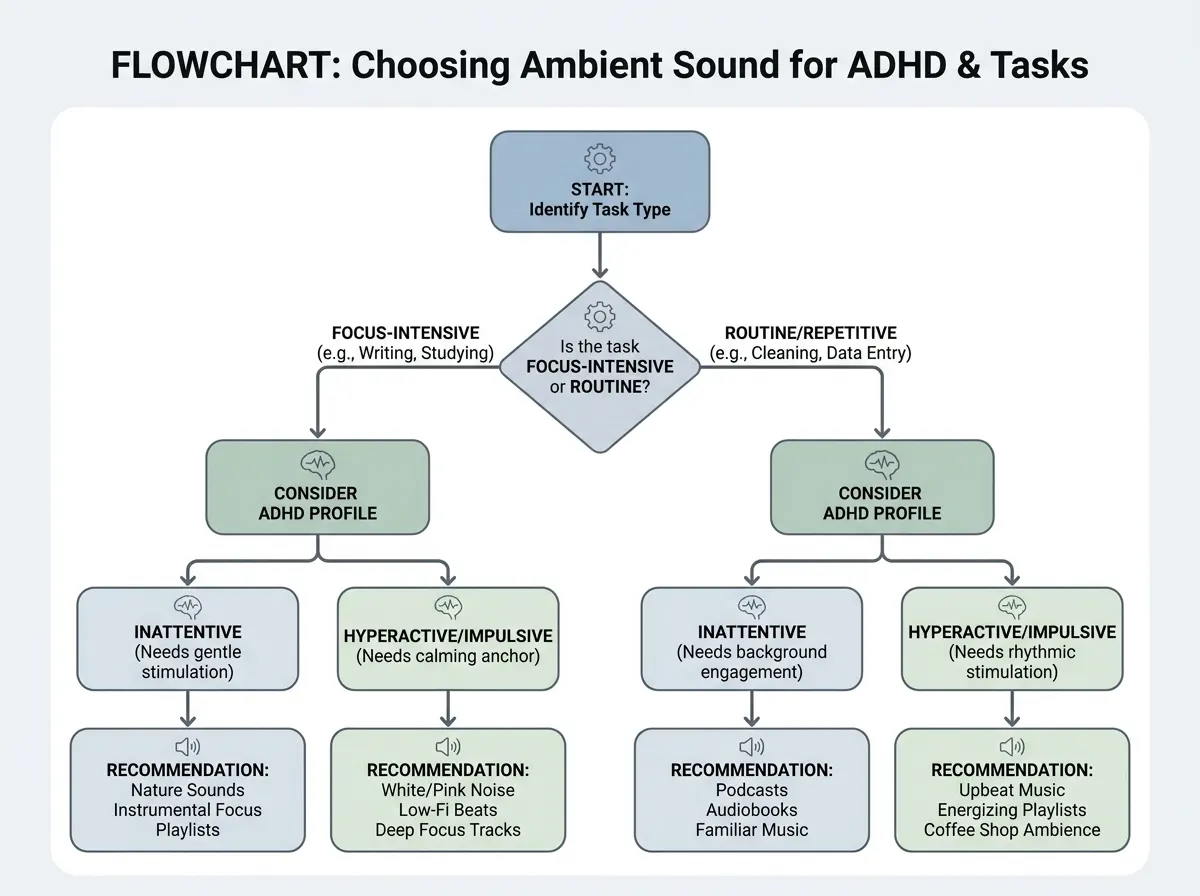
- Your ADHD traits may matter. In a 2024 study of 43 young people with clinical ADHD, those with more inattentive traits did better with white noise on a working memory task, while those with more hyperactive/impulsive traits performed worse. If white noise leaves you more restless rather than calmer, that fits the pattern, and a softer or quieter option is worth trying.
- Sensory sensitivity is common. A systematic review cited in this 2024 paper on sensory processing in ADHD concluded that sensory processing problems are more common in children with ADHD than in typically developing children. That helps explain why the same track can soothe one person and grate on another.
There is also a practical reason not to default to silence. For many people with ADHD a quiet room does not feel calm: with nothing in the background, every cough, chair scrape or distant conversation becomes a foreground event. A steady sound bed gives those small noises something to blend into. So test a low-volume sound against silence for the same kind of task before deciding which suits you.
ADHD Focus Music vs Ambient Sound: What the Evidence Says
Music helps some people with ADHD focus and hurts others, and the task matters as much as the track. Lyrics are the most reliable distraction during reading, while familiar instrumental music at low volume is the safer choice for demanding work. Ambient sound sits at the steadier, more predictable end of the same range.
In a classroom study of boys with ADHD, video clearly distracted them, but music split the group: some did worse than in silence and others did better. A 2020 study of 25 preadolescents with ADHD and 25 without found reading comprehension improved with background music in the ADHD group and dropped in the other group. A 2023 systematic review found that music’s effects in ADHD depended on genre, tempo and task difficulty.
Lyrics, tempo and familiarity
A meta-analysis of 65 reading studies found that noise, speech and music all slightly reduced reading performance, and that intelligible speech and music with lyrics hurt most. In a 2025 survey of 434 young adults, those who screened positive for ADHD listened to stimulating music more often, yet both groups preferred relaxing, instrumental, familiar, self-chosen music for thinking-heavy tasks. In a 2024 study of adults (not an ADHD sample) who already work to music, their chosen music reduced mind-wandering.
How to pick for a given task
Music tends to cost you on verbal work, with tracks that have words or big swings in tempo, and whenever you start picking songs instead of working. Keep lyrics for chores. For reading or writing, try familiar instrumental tracks against a steady ambient sound at low volume, over a few sessions of the same task, and compare how much you finished.
Spotify or YouTube playlists and apps such as Brain.fm or Endel fit the same test. FocusBox is not a music service: it plays ambient sounds you pick for each task, such as rain, ocean waves, forest, coffee shop or fireplace, at a volume you set. It is a focus tool, not an ADHD treatment.
How to Choose the Best Ambient Sound for Your ADHD Needs
Finding the right ambient sounds for ADHD is rarely as simple as picking the first playlist you find. Individual brain chemistry, sensory preferences, and the type of task at hand all shape which soundscape will actually help you focus. A structured approach can help you discover what works best, especially if distractions or sound sensitivity are part of your daily experience.
Step-by-Step: Matching Sound to Task and Sensory Profile
- Identify your ADHD profile and sensory needs. Are you easily overstimulated by certain noises, or do you need constant background input to keep restless thoughts at bay? For example, if you’re prone to sensory overload, lower-frequency sounds like brown noise may feel less intrusive than white noise.
- Consider the complexity of your current task. Simple, repetitive chores tolerate more musical or layered sounds (like lo-fi or nature ambiances), while cognitively demanding work – think reading, writing, or planning – often pairs best with steady, non-melodic options (white noise, brown noise).
- Start with one sound type for a specific task. Use that sound while you work for 20-30 minutes. Pay attention to changes in focus or whether the sound becomes distracting, tiring, or fades into the background in a helpful way.
- Track your results. Use an app or a simple notebook to log what you listened to alongside task completion or perceived focus. Over a week, try 2-3 different sounds for similar tasks and compare outcomes.
- Adjust based on feedback. If you notice fatigue, switch sound types or reduce volume. Increase complexity only if the current sound feels too monotonous or ineffective.
Decision Table: Matching ADHD Profile, Task, and Sound Type
| ADHD Profile | Task Type | Recommended Sounds |
|---|---|---|
| High Sensory Sensitivity | Deep Focus (e.g. reading, coding) | Brown noise, gentle rain, soft instrumental music |
| Sensory-Seeking/Under-stimulated | Routine Tasks (e.g. email, chores) | White noise (moderate volume), lo-fi hip-hop, café ambience |
| Easily Distracted by Lyrics or Melodies | Writing, studying | Pink noise, nature sounds without birdsong, binaural beats |
| Needs Novelty to Sustain Attention | Creative brainstorming | Instrumental music (unfamiliar tracks), urban soundscapes, forest ambience |
| Prone to Fatigue with Certain Frequencies | Long work sessions | Alternating brown and pink noise, soft ocean waves |
Experimentation and Adjustment
The most effective way to find your ideal ambient sounds for ADHD is deliberate experimentation. Set aside time to test different sound types and volumes while tracking your focus and comfort. If a sound feels exhausting after 10 minutes, switch it out. If background chatter (like café sounds) makes you anxious instead of focused, try a neutral alternative. Use short sessions at first, and jot down what works and what doesn’t. Remember, your preferences may shift between tasks or even from day to day. Flexibility is key. By tuning in to your responses and tweaking your audio environment, you’ll build a toolkit that reflects your real needs, not just popular recommendations.
Frequently Asked Questions About Ambient Sounds for ADHD
Do ADHD people focus better with music?
Some do and some do not. In a classroom study of boys with ADHD, music helped some and hurt others compared with silence, so test it on your own tasks.
What is the best music to focus on ADHD?
No genre wins in the research. For demanding work, familiar instrumental music at low volume is the safer bet, because lyrics distract most during reading. If music keeps pulling your attention, switch to a steady ambient sound.
How can I focus if I have ADHD without medication?
Talk to a clinician about what fits you. The NHS notes that not everyone with ADHD needs or wants medicine, and lists exercise, sleep, workplace adjustments such as a quiet workspace or help structuring tasks, and talking therapies such as CBT. Background sound can support a routine, but it is not treatment.
Is there scientific evidence that ambient sounds help with ADHD?
Yes, there is research supporting the use of ambient sounds for ADHD. A study by Söderlund et al. (2007) found that moderate white noise improved cognitive performance in children with ADHD. This effect is linked to differences in dopamine pathways – ADHD brains often need more external input to reach optimal concentration. Ambient sounds help bring the brain’s arousal state into the zone where focus is possible.
However, not every sound works for every person. Individual brain chemistry, sensory preferences, and even the task at hand all play a role in how effective a particular sound will be.
Which types of ambient sounds are best for ADHD?
There isn’t a single answer. White noise is the most researched and, for some, the most effective – especially for repetitive or straightforward tasks. However, many users find it too harsh over long periods. Brown noise, which mimics the low, deep rumble of thunder or heavy rain, is often described as more calming and less fatiguing. Nature sounds like ocean waves and forest ambiance are another favorite, offering consistent, non-intrusive stimulation that many people with ADHD find helpful.
Instrumental and lo-fi music, particularly tracks without lyrics, are also popular for their steady rhythm and lack of distracting words. For those intrigued by emerging options, binaural beats have some anecdotal support, but research is still limited.
How do I know which ambient sound will work for me?
You’ll need to experiment. Research consistently highlights individual differences: what helps one person focus can distract another. Start by matching the sound profile to the task. For example, white or brown noise often works best for deep focus, while lo-fi beats or nature sounds may help with lighter, routine activities.
- Try different sound options for a week each and track your concentration levels.
- Adjust the volume – too loud can be distracting, while too soft might not provide enough stimulation.
- Notice if certain sounds work better at different times of day or for different tasks.
Can ambient sounds be harmful or cause side effects?
For most people, ambient sounds used at moderate volume are safe and pose minimal risk. However, some individuals may experience fatigue, headaches, or irritability if sounds are too loud or too monotonous. White noise, in particular, can become grating for sensitive listeners. If you notice discomfort, try switching to brown noise or nature sounds, and always keep the volume just loud enough to provide background stimulation.
If you have underlying auditory sensitivities or conditions like tinnitus, consult with a healthcare professional before starting extended listening sessions.
What if ambient sounds distract me instead of helping?
This is common. Sometimes, the wrong type of sound – or even the right sound at the wrong time – can backfire. If you find your attention drifting or feel more stressed, consider:
- Switching to a different sound profile (e.g., from white noise to rain sounds).
- Reducing the volume or turning off the sound for a short break.
- Trying instrumental music or lo-fi beats for a more dynamic background.
It’s normal for preferences to change over time. What helps you focus one week might feel distracting the next. Keep an open mind and adjust your approach as needed.
Are there situations where ambient sounds for ADHD don’t work?
Yes. Cognitively demanding tasks such as reading dense material or solving complex problems may actually require silence or a different strategy altogether. Music, particularly with lyrics, can hinder performance for these task types. In these cases, try pure noise (like brown noise) or low-level nature sounds, but don’t hesitate to turn off all audio if that’s more effective for your focus.
How do I integrate ambient sounds into my daily ADHD management?
Start by identifying your toughest focus periods – maybe it’s getting started in the morning or pushing through the mid-afternoon slump. Use your productivity tool or a dedicated audio app to play chosen sounds during these windows. Over time, you’ll develop a sense for which soundscapes align with your unique concentration needs. The key is personalization – build your own audio toolkit, and don’t be afraid to mix things up as your routines and work demands evolve.
Crafted with PostNext app
Sources
- Systematic Review and Meta-Analysis: Do White Noise or Pink Noise Help With Task Performance in Youth With ADHD? (JAACAP, 2024)
- Sensory white noise in clinical ADHD: Who benefits from noise, and who performs worse? (2024)
- Provenance of a ‘sense-sational’ wait: sensory processing differences in ADHD (PMC)
- Music and video as distractors for boys with ADHD in the classroom (J Abnorm Child Psychol, 2011)
- Contrasting effects of music on reading comprehension in preadolescents with and without ADHD (Psychiatry Res, 2020)
- Effects of Music on ADHD and Potential Application in Serious Video Games: Systematic Review (J Med Internet Res, 2023)
- Auditory Distraction During Reading: A Bayesian Meta-Analysis (Perspect Psychol Sci, 2018)
- Listening habits and subjective effects of background music in young adults with and without ADHD (Front Psychol, 2025)
- The role of mood and arousal in the effect of background music on attentional state and performance (Sci Rep, 2024)
- ADHD in adults: how to manage ADHD (NHS, reviewed March 2025)
Related reading
- Top Ambient Sound Apps for Concentration in 2026: The Ultimate Guide to Focus-Boosting Tools
- The Science of Background Noise: How Ambient Sounds Can Boost Your Focus
- Comparing AI Timers: The Features That Truly Matter for ADHD Users (2026 Guide)
- How Focus Noise Could be the Key to Your Home Working Success
- ADHD Stimming: Examples, Causes and Quieter Stims
- Brown Noise vs White Noise: What the Research Shows